
2026 Buyer's Guide
Best Water Filters for PFAS Removal
We reviewed 12 top-rated water filters certified or lab-tested to remove PFAS forever chemicals. Find the right filter for your budget, risk level, and home setup.
Affiliate disclosure · CheckPFAS earns a small commission on filter purchases at no cost to you. Products are ranked on PFAS removal, NSF certification, and 5-year cost — not commission rates. Full disclosure
How we rank
The CheckPFAS Score, weighted
Every filter gets a 0–10 score computed from four declared factors, in this exact weighting. No commission, no manufacturer input, no sponsored placements. The math is in the open below — and the same code runs at build time on every product in the table.
Source code that computes these scores is the same at build time and visible — see the
computeScore()
function in src/pages/reviews/index.astro.
Top 12 ranked
All filters, scored
Waterdrop G3P800 RO System
Homes with HIGH PFAS levels — removes 99%+ of all PFAS compounds
APEC ROES-PH75 RO System
Budget-conscious families who want proven RO performance with mineral-rich water
Clearly Filtered 3-Stage Under-Sink System
Homes with MODERATE PFAS levels who want high removal rates without RO waste water
Clearly Filtered Water Pitcher
Anyone who wants the easiest possible PFAS solution — just pour and drink
AquaTru Countertop RO System
Renters and apartment dwellers who need serious PFAS removal without permanent installation
iSpring RCC7AK 6-Stage RO System
Budget shoppers who want solid RO performance without paying premium prices
Big Berkey Travel Gravity Filter
Off-grid homes, emergency preparedness, and anyone who wants no-power PFAS filtration
Epic Pure Water Filter Pitcher
Eco-conscious consumers who want certified PFAS removal in a sustainable pitcher
Aquasana AQ-5300+ Max Flow Under-Sink
Families who want multi-contaminant protection with good PFAS reduction at a fair price
ZeroWater 10-Cup Pitcher
Budget-conscious households who want basic PFAS reduction at the lowest entry price
SpringWell CF1 Whole House Filter
Larger homes that need high-flow whole-house filtration with strong PFAS reduction
Aquasana EQ-1000 Whole House System
Homeowners who want PFAS reduction from every water source — showers, laundry, and drinking water
Tap any filter for the full review, score breakdown, and certified affiliate link.
Quick Match
Find your perfect filter
Answer 3 quick questions and we'll match you to the best filter for your situation.
What is your water's PFAS risk level?
No problem — check your ZIP code to find your water system's EPA test results, then come back to get a matched recommendation.
Check My ZIP Code →Your Recommended Filter
Side-by-Side Comparison
PFAS removal rates
All 12 filters, sorted by verified PFAS removal percentage.
How Filters Work
Filtration technologies explained
Understanding how each technology works helps you choose the right filter for your needs.
RO
Reverse osmosis
Water is forced at pressure through a semi-permeable membrane with pores as small as 0.0001 microns — physically too small for PFAS molecules to pass through. The result is near-pure filtered water.
98–99.9%
AC
Activated carbon block
Porous carbon material (often from coconut shells) uses adsorption — PFAS molecules chemically bond to the carbon surface and are trapped. NSF P473 certification specifically validates this works for PFOA and PFOS.
90–99.5%
GP
Gravity pitcher
Water drips through a filter cartridge by gravity alone — no plumbing, no electricity, no installation. The filter medium is activated carbon or similar. Performance varies widely; only NSF 53 or NSF P473 certified pitchers reliably remove PFAS.
94–99.5%
WH
Whole-house carbon
Large tanks of catalytic carbon or KDF media treat all water entering the home — every tap, shower, and appliance. Lower PFAS removal than point-of-use filters, but the only solution that reduces exposure through bathing, laundry, and steam inhalation.
90–93%
NSF certifications, decoded
Independent laboratories test and certify filters to these standards. Always verify before buying.
Reverse Osmosis
Certifies RO systems for contaminant reduction including PFAS, lead, and nitrates. The gold standard for under-sink and countertop RO units.
Health Effects
Certifies carbon block and pitcher filters for health-effect contaminant reduction. Must be combined with PFAS-specific testing (P473) for full PFAS assurance.
PFAS-Specific
Tests directly for PFOA and PFOS reduction — the two PFAS compounds with the strictest EPA limits. The most relevant certification for PFAS-contaminated water.
Emerging Contaminants
Covers 15 emerging contaminants including pharmaceuticals, herbicides, and some PFAS. Broader scope but less specific to PFAS than P473.
Reverse Osmosis Systems
4 filters
Homes with HIGH PFAS levels — removes 99%+ of all PFAS compounds
PFAS Removal
99.9%

Budget-conscious families who want proven RO performance with mineral-rich water
PFAS Removal
99%

Budget shoppers who want solid RO performance without paying premium prices
PFAS Removal
98%

Renters and apartment dwellers who need serious PFAS removal without permanent installation
PFAS Removal
99%
Under-Sink Filters
2 filters
Homes with MODERATE PFAS levels who want high removal rates without RO waste water
PFAS Removal
99.5%

Families who want multi-contaminant protection with good PFAS reduction at a fair price
PFAS Removal
95%
Pitcher Filters
3 filters
Anyone who wants the easiest possible PFAS solution — just pour and drink
PFAS Removal
99.5%

Budget-conscious households who want basic PFAS reduction at the lowest entry price
PFAS Removal
94%
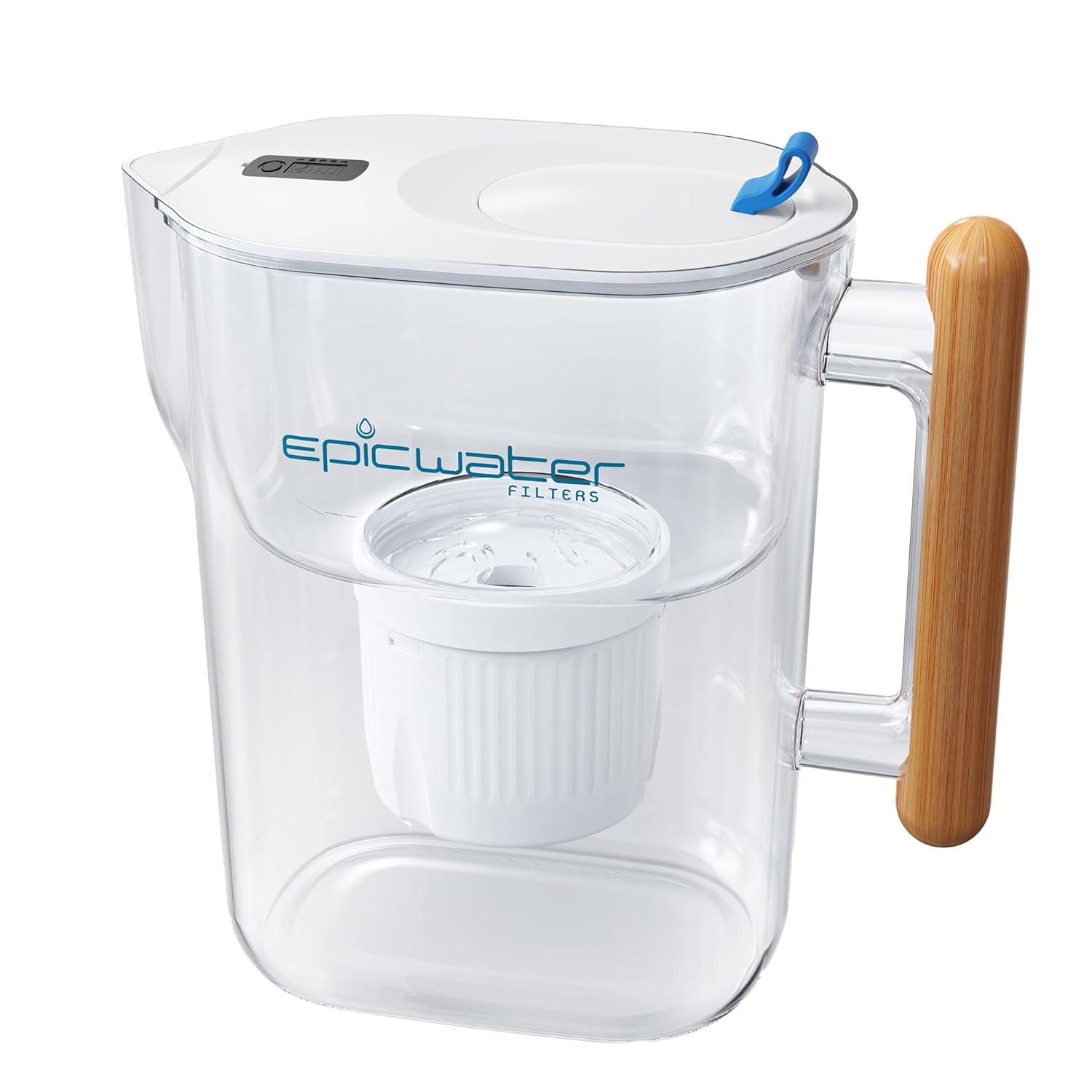
Eco-conscious consumers who want certified PFAS removal in a sustainable pitcher
PFAS Removal
96%
Whole-House Systems
2 filters
Homeowners who want PFAS reduction from every water source — showers, laundry, and drinking water
PFAS Removal
90%

Larger homes that need high-flow whole-house filtration with strong PFAS reduction
PFAS Removal
93%
Countertop Filters
1 filter
Long-Term Value
Filter vs. bottled water: true cost over time
Based on a typical household spending ~$1,200/year on bottled water. Annual filter costs include replacement cartridges only.
| Filter / Option | Upfront | Annual | Year 1 Total | Year 3 Total | 5-yr Total | 5-yr Savings |
|---|---|---|---|---|---|---|
| Bottled Water (baseline) | — | $1,200 | $1,200 | $3,600 | $6,000 | — |
| ZeroWater Pitcher | $37 | $80 | $117 | $277 | $437 | $5,563 |
| Clearly Filtered Pitcher | $90 | $90 | $180 | $360 | $540 | $5,460 |
| iSpring RCC7AK (RO) Best Value | $199 | $80 | $279 | $439 | $599 | $5,401 |
| APEC ROES-PH75 (RO) | $269 | $80 | $349 | $509 | $669 | $5,331 |
| AquaTru Countertop RO | $475 | $120 | $595 | $835 | $1,075 | $4,925 |
| Waterdrop G3P800 (RO) | $759 | $60 | $819 | $939 | $1,059 | $4,941 |
Estimates based on household of 2–4 people. Bottled water baseline: 2L/day at ~$1.50/L. Annual filter costs are manufacturer-recommended replacement schedules.
Common Questions
Frequently asked questions
Still not sure which filter you need?
Check your ZIP code first to see your actual PFAS levels — then use our Filter Finder for a personalised recommendation.
Some links on this page are affiliate links. We earn a small commission if you make a purchase, at no extra cost to you. Recommendations are based on certifications, lab testing, and real-world performance — not commission rates.